Guatemala sits on one of the most geologically active zones on Earth. With 37 volcanoes — four of them currently active — the country offers some of the most dramatic hiking experiences in the Americas. But recent incidents have raised a question that every traveler planning a volcano tour should ask before booking: is volcano hiking in Guatemala actually safe?
The honest answer is: it depends entirely on which volcano you choose and who takes you there.
What Happened at Santiaguito — and Why It Matters
In April 2026, videos circulated on social media showing a group of tourists dangerously close to the crater of Volcán Santiaguito, in Quetzaltenango. Seconds later, the volcano erupted — sending a massive column of ash and pyroclastic material into the sky while the group scrambled to safety.
The incident raised immediate concern not just because of the obvious danger, but because Santiaguito’s ascent is officially restricted. Guatemala’s tourism authority, INGUAT, had already issued clear warnings: Santiaguito is not suitable for tourist visits, its activity can shift within minutes, and approaching the crater puts lives at risk.
What made the situation worse was that the group had reportedly been taken there by informal, uncertified guides — individuals operating outside the safety regulations that govern responsible tourism in Guatemala.
This is not an isolated story. It is a pattern that repeats every time tourists choose price over certification, or simply don’t know the difference between a registered operator and someone offering tours outside any regulatory framework.
Not All Guatemalan Volcanoes Are the Same
This is the most important thing to understand before planning any volcano experience in Guatemala. The country’s volcanoes fall into distinct categories when it comes to tourism suitability.
Volcanoes open and safe for guided tourism
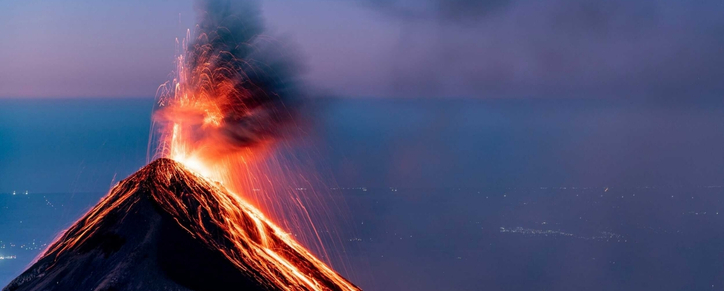
Acatenango (3,976 m) is one of the most rewarding overnight hikes in Central America. The trail leads to a high-altitude campsite with a direct, breathtaking view of Volcán de Fuego erupting — sometimes every 20 to 30 minutes. With proper gear, an accredited guide, and reasonable physical preparation, Acatenango is considered safe for experienced hikers.
Pacaya is the most accessible active volcano in Guatemala, located just 90 minutes from Antigua. Its lava fields and relatively gentle slopes make it a popular choice for all fitness levels. Guided day hikes operate regularly with proper safety protocols in place.
Volcanoes with restricted or prohibited access
Santiaguito, as demonstrated by recent events, is among the volcanoes where ascent is officially prohibited. Its unpredictable eruptive behavior and the force of its pyroclastic material make it genuinely life-threatening at close range.
Fuego is another volcano tourists frequently ask about — and the answer is no. Fuego’s eruption patterns are erratic and powerful. It can be safely observed from Acatenango’s base camp, at a respectful distance. Getting closer is not something a responsible operator will ever offer.
The key takeaway: the volcano itself is only part of the safety equation. The guide and the operator are the other half.
Why Your Guide’s Certification Is Not Optional
Guatemala has a framework for responsible tourism built around INGUAT — the Instituto Guatemalteco de Turismo. Certified agencies are required to use guides who have completed formal safety training, are familiar with current volcanic activity alerts, and operate within established protocols for emergency situations.
When you book with an uncertified guide, none of that applies. There is no obligation to check eruption alerts before departure, no established procedure if conditions change mid-hike, and no accountability if something goes wrong.
The Santiaguito incident is a direct illustration of this gap. The tourists who found themselves running from a pyroclastic eruption were not reckless adventurers. They were travelers who trusted someone claiming to offer a “volcano tour” without asking whether that person had the certification or the basic knowledge to make that call responsibly.
The Questions to Ask Before Booking Any Volcano Tour in Guatemala
Before confirming any volcano experience, ask your operator the following:
Is the volcano currently open for tourist access? Access restrictions change frequently based on activity levels. A reputable operator checks CONRED and INSIVUMEH alerts before every departure.
Is your agency INGUAT-certified? Ask to see the certification. If the operator hesitates or redirects the question, that is your answer.
Are your guides formally trained in mountain safety and emergency protocols? A trained guide knows when to turn back, how to communicate a volcanic event calmly, and the fastest safe descent routes from any point on the trail.
What is your cancellation policy if conditions change on the day of the hike? A serious operator will cancel or modify a tour if conditions deteriorate. An informal guide with no accountability will not.
What Responsible Volcano Tourism in Guatemala Looks Like
At Cyman Travel, every volcano tour we operate follows a clear safety protocol. We are INGUAT-certified, our guides hold formal accreditation, and we monitor volcanic activity alerts before every single departure. If a volcano’s status changes — we change the plan, full stop.
Our Acatenango overnight hike is one of our most requested experiences: the view of Fuego erupting from a safe, established campsite at 3,600 meters is one of the most extraordinary sights in Guatemala. No improvisation, no cutting corners.
The Pacaya volcano day hike is the perfect first volcano experience — accessible, visually stunning, and operated entirely within regulated access zones.
If you have questions about current volcanic activity or want a customized itinerary, our team is available 24/7 via our contact page or directly on WhatsApp.
The Bottom Line
Guatemala’s volcanoes are among the most spectacular natural features in the Western Hemisphere. Watching Fuego light up the night sky from Acatenango, standing on a lava field at Pacaya — these are experiences that stay with travelers for a lifetime.
But the events at Santiaguito are a reminder that volcano hiking in Guatemala carries real risks when approached without the right guidance. The difference between a life-changing experience and a dangerous one often comes down to a single decision: who you book with.
Choose a certified, registered operator. Verify the certification. Ask the questions above. And if something feels off — the price is suspiciously low, the guide can’t explain the current volcanic alert level, or the volcano sounds familiar from a recent news story — trust that instinct.
Guatemala’s volcanoes will be there. There is no reason to rush into the wrong hands to see them.
Cyman Travel is an INGUAT-certified tour agency based in Antigua Guatemala. We specialize in safe, guided volcano experiences and custom tours across Guatemala. Learn more about us.